High-Efficiency Furnace vs Standard Furnace: Which Saves More Money for Northwest Indiana Homeowners?
When it comes to heating your home, the choice between a high-efficiency furnace and a standard furnace can significantly impact your energy bills and overall comfort. High-efficiency furnaces are designed to convert a greater percentage of fuel into usable heat, which can lead to substantial savings over time. This article will explore the differences between these two types of furnaces, focusing on their efficiency ratings, cost savings, installation and maintenance costs, local incentives, and how to choose the right option for your home. By understanding these factors, homeowners in Northwest Indiana can make informed decisions that align with their financial and comfort needs.
What is AFUE and How Does It Affect Furnace Efficiency?
Annual Fuel Utilization Efficiency () is a critical metric that measures a furnace’s efficiency in converting fuel into heat over the course of a year. A higher AFUE rating indicates that a furnace is more efficient, meaning it uses less fuel to produce the same amount of heat. For instance, a furnace with an AFUE of 90% converts 90% of the fuel it consumes into heat, while the remaining 10% is lost. This efficiency directly impacts energy costs, as higher-rated furnaces can lead to lower heating bills.
How to Understand Furnace AFUE Ratings and Their Impact on Energy Savings
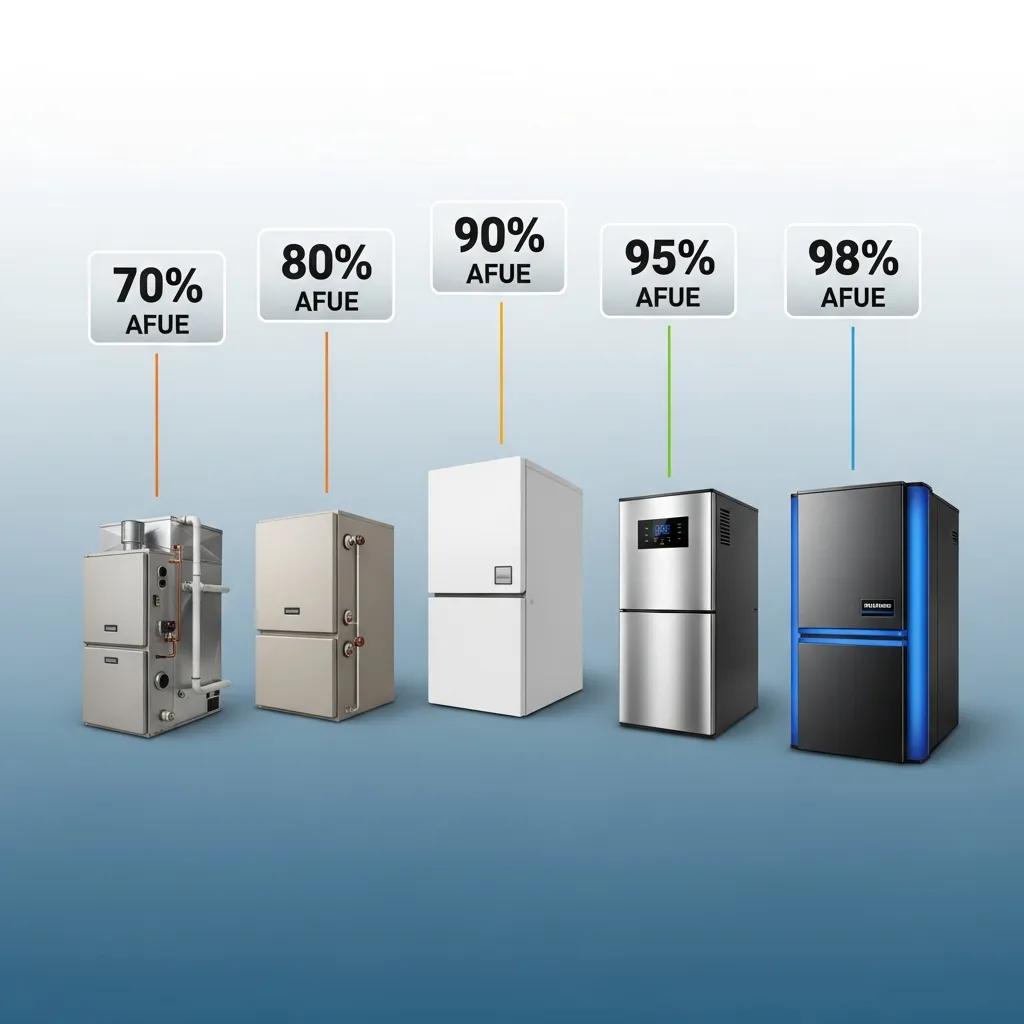
AFUE ratings are expressed as a percentage, and understanding these ratings is essential for homeowners. For example, a standard furnace may have an AFUE rating of around 78% to 80%, while a high-efficiency furnace can range from 90% to over 98%. This difference means that high-efficiency furnaces can save homeowners a significant amount on their energy bills. By investing in a furnace with a higher “AFUE rating”, homeowners can expect to see a reduction in their heating costs, especially in colder climates like Northwest Indiana.
What AFUE Rating Should You Look for in a High-Efficiency Furnace?
When selecting a high-efficiency furnace, homeowners should look for an AFUE rating of at least 90%. Furnaces with ratings above 95% are considered top-tier and can provide the best energy savings. Additionally, these high-efficiency models often come with advanced features such as variable-speed blowers and modulating gas valves, which further enhance their performance and comfort levels. Investing in a furnace with a high AFUE rating not only reduces energy costs but also contributes to a more sustainable home environment.
Cost Savings: High-Efficiency vs Standard Furnaces in NW Indiana
High-efficiency furnaces typically offer greater cost savings compared to standard models due to their superior energy efficiency. Over time, the initial investment in a “high-efficiency furnace” can be offset by lower utility bills, making them a financially sound choice for many homeowners.
What Are the Average Energy Savings with High-Efficiency Furnaces?
On average, homeowners can expect to save between 10% to 30% on their heating bills by switching from a standard furnace to a high-efficiency model. For example, if a standard furnace costs $1,200 annually to operate, a high-efficiency furnace could reduce that cost to between $840 and $1,080. These savings can accumulate significantly over the lifespan of the furnace, often leading to a return on investment within 5 to 7 years, depending on usage and energy prices.
How Does Furnace Efficiency Translate to Lower Heating Bills in Northwest Indiana?
In Northwest Indiana, where winters can be harsh, the efficiency of your furnace plays a crucial role in managing heating costs. High-efficiency furnaces not only reduce energy consumption but also maintain a more consistent indoor temperature, enhancing comfort. Homeowners who invest in these systems often report lower heating bills, especially during peak winter months when energy usage is at its highest.
What Are the Installation and Maintenance Costs for High-Efficiency vs Standard Furnaces?
The costs associated with installing and maintaining a furnace can vary significantly between high-efficiency and standard models. Understanding these costs is essential for homeowners planning to upgrade their heating systems.
How Much Does Furnace Installation Cost in Northwest Indiana?
In Northwest Indiana, the installation cost for a high-efficiency furnace typically ranges from $3,500 to $6,000, depending on the model and complexity of the installation. In contrast, standard furnaces can be installed for approximately $2,500 to $4,000. While the upfront cost of a “high-efficiency furnace” is higher, the long-term savings on energy bills can make it a worthwhile investment.
What Are the Maintenance and Repair Considerations for Different Furnace Types?
Maintenance costs for high-efficiency furnaces can be slightly higher due to their complex components and advanced technology. Homeowners should expect to spend around $150 to $300 annually on maintenance for high-efficiency models, while standard furnaces may require $100 to $200 per year. Regular maintenance is crucial for both types to ensure optimal performance and longevity, but high-efficiency models may require more specialized service.
Which Local Incentives and Rebates Can Help Offset High-Efficiency Furnace Costs?
Many homeowners may be concerned about the initial investment required for high-efficiency furnaces. Fortunately, various local incentives and rebates can help offset these costs, making it more affordable to upgrade.
What Rebates and Incentive Programs Are Available for Northwest Indiana Homeowners?
Homeowners in Northwest Indiana can take advantage of several rebate programs offered by local utility companies and government agencies. These programs often provide cash rebates for the installation of high-efficiency furnaces, which can range from $100 to $500, depending on the efficiency rating and the specific program. Additionally, federal tax credits for high-efficiency heating equipment were available under the Inflation Reduction Act starting in 2023, offering up to $1,200 in credits for qualifying furnaces, further reducing the overall cost.
How to Apply for Energy Efficiency Rebates on Furnace Installation?
Applying for energy efficiency rebates typically involves submitting proof of purchase and installation, along with any required documentation to the respective utility company or agency. Homeowners should check the specific requirements for each program, as they can vary. It is advisable to keep all receipts and documentation organized to streamline the application process and ensure eligibility for available rebates.
How to Choose the Right Furnace for Your Home: High-Efficiency or Standard?
Choosing the right furnace for your home involves considering several factors, including efficiency, cost, and personal heating needs. Understanding these elements can help homeowners make an informed decision.
What Factors Should Homeowners Consider When Comparing Furnace Efficiency?
When comparing furnace options, homeowners should consider the following factors:
- AFUE Ratings: Higher ratings indicate better efficiency and potential savings.
- Initial Costs vs. Long-Term Savings: Weigh the upfront investment against expected energy savings.
- Home Size and Insulation: Larger homes or those with poor insulation may benefit more from high-efficiency models.
Are High-Efficiency Furnaces Worth the Investment in Northwest Indiana?
For many homeowners in Northwest Indiana, high-efficiency furnaces are worth the investment. The combination of lower energy bills, potential rebates, and increased comfort makes them an attractive option. Additionally, as energy costs continue to rise, the long-term savings associated with high-efficiency models can provide significant financial relief.
What Are Real-World Energy Savings Examples and Testimonials from Northwest Indiana?

Real-world examples and testimonials from homeowners can provide valuable insights into the benefits of high-efficiency furnaces.
How Have Homeowners Reduced Heating Costs with High-Efficiency Furnaces?
Many homeowners in Northwest Indiana have reported substantial reductions in their heating costs after switching to high-efficiency furnaces. For instance, one homeowner noted a 25% decrease in their heating bills during the winter months, translating to savings of over $300 annually. These testimonials highlight the tangible benefits of investing in a more efficient heating system.
What Do Local Experts Say About Furnace Efficiency and Savings?
Local HVAC experts emphasize the importance of choosing the right furnace for both comfort and cost savings. They often recommend high-efficiency models for their long-term benefits, particularly in regions with extreme weather conditions. Experts also advise homeowners to consider the total cost of ownership, including installation, maintenance, and energy costs, when making their decision.