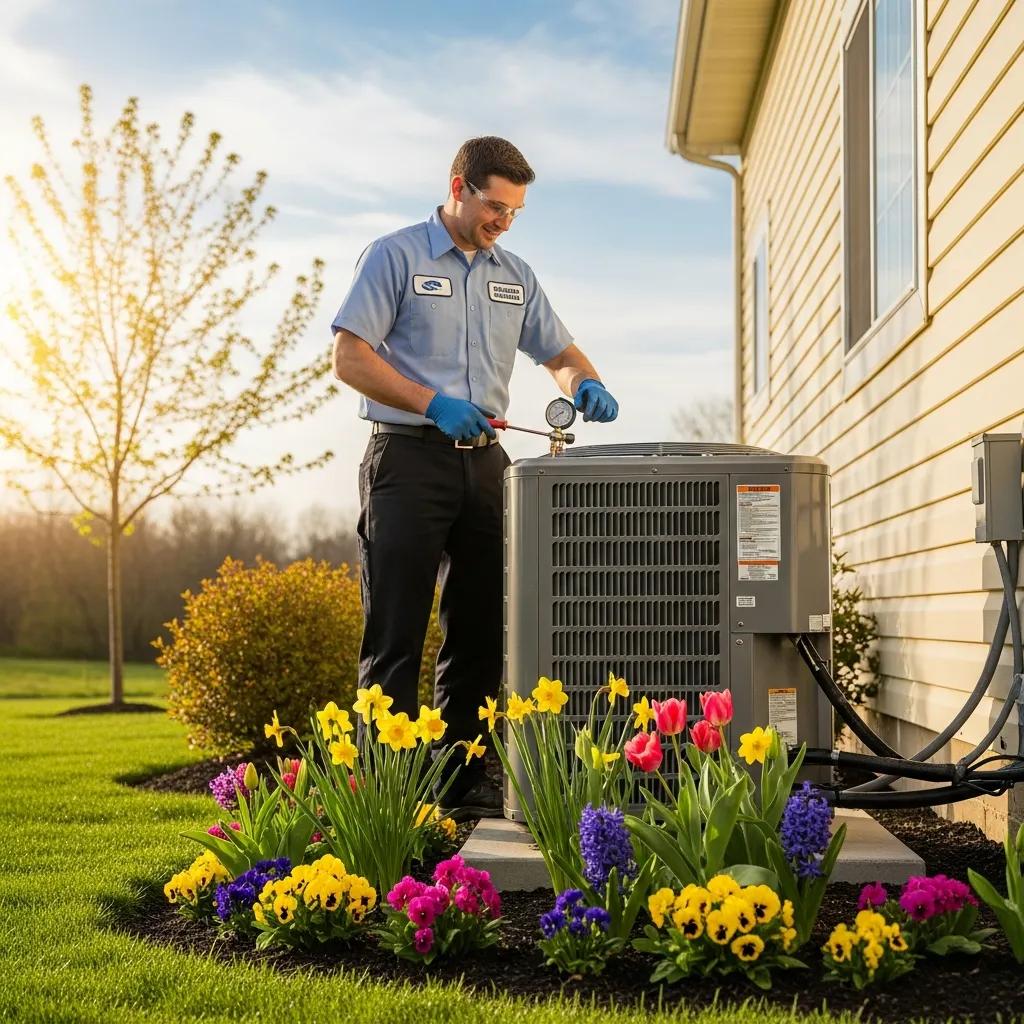
Spring HVAC & AC Maintenance: A Practical Checklist and Cost Guide
With warmer weather approaching, a spring tune-up helps your HVAC run reliably and efficiently. This guide summarizes why spring maintenance matters, gives a concise checklist you can use, and outlines expected costs so you can plan. A small annual inspection prevents many avoidable breakdowns and higher bills.
Spring AC Maintenance Takeaways: Cost, Benefits & Tips
- Prepare your AC in spring to improve efficiency and reduce costs.
- Schedule an annual inspection to catch small issues early and protect indoor air quality.
- Check filters, refrigerant, and thermostat operation for reliable cooling.
- Routine tune-ups lower energy use, reduce repair risk, and extend equipment life.
- Typical professional tune-ups cost about $100–$200; DIY covers basic tasks.
- Call a technician for strange noises, uneven cooling, or sudden bill increases.
How Often Should You Perform Spring HVAC System Inspection?
Aim for at least one full inspection per year, ideally in spring before cooling demand rises. Homeowners can do basic monthly checks and pair them with an annual professional service to ensure system health and indoor air quality.
Trusted HVAC professionals advise routine inspections to catch issues early.
Spring HVAC Service & Maintenance Guide
If you work with a service company, schedule regular check-ins — quarterly if possible. At minimum, have a licensed contractor handle spring maintenance and any needed repairs. — Your guide to HVAC service, 1995
Key Components Checked During Spring HVAC Inspection
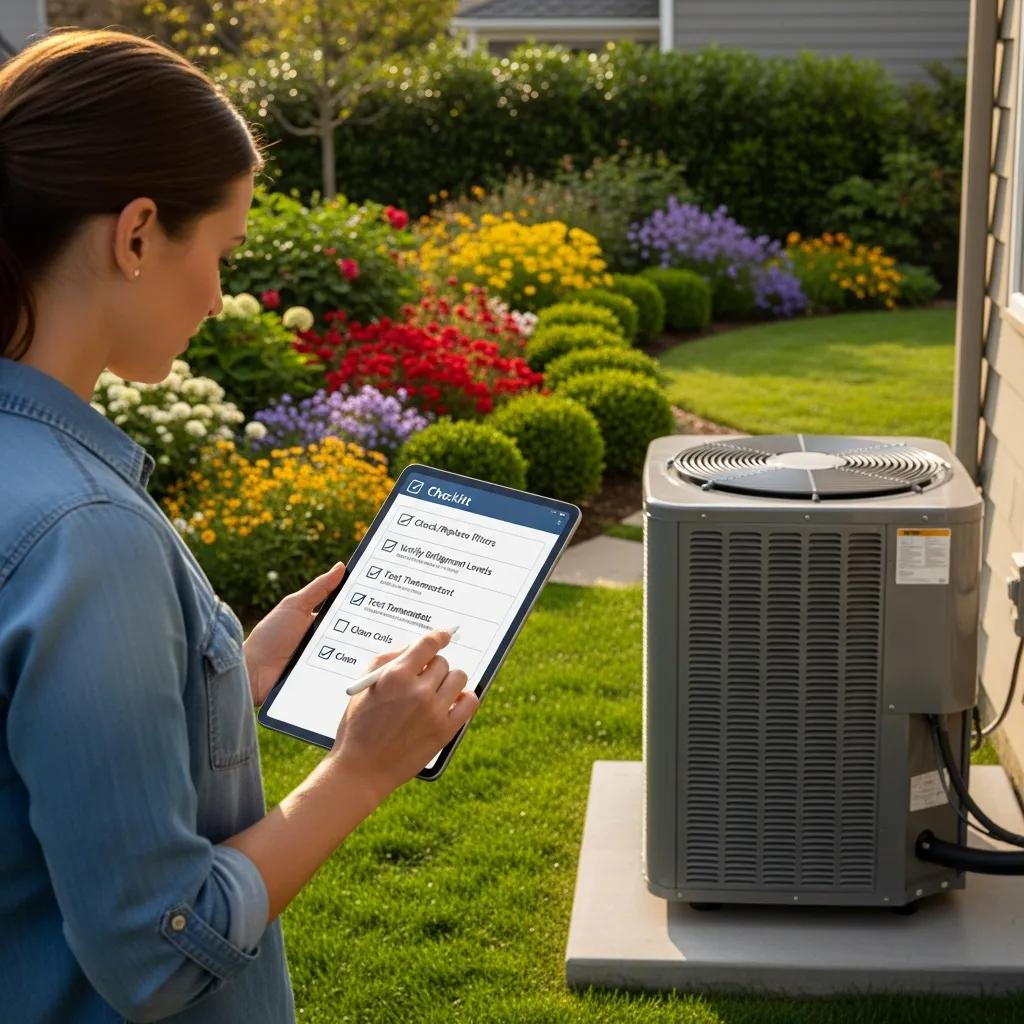
Technicians inspect critical parts that affect cooling and efficiency:
- Filters — Replace when dirty to maintain airflow.
- Refrigerant — Proper levels are required; low charge suggests a leak needing a pro.
- Thermostat — Ensure calibration and correct operation.
Include these checks in every spring service to keep performance steady and energy use lower.
Benefits of Regular HVAC Tune-Ups in Spring
Spring tune-ups deliver practical homeowner benefits:
- Improved efficiency — Clean, adjusted parts use less energy.
- Cost savings — Preventive maintenance lowers the chance of costly repairs.
- Extended lifespan — Regular care helps equipment last longer.
Research shows preventive maintenance generally provides better long-term value than reactive repairs.
HVAC Maintenance: Cost-Benefit of Preventive vs. Corrective
Studies comparing preventive maintenance (PM) and corrective maintenance (CM) indicate that planned, regular service usually offers a stronger cost–benefit outcome over reactive repairs. — Preventive and corrective maintenance–cost comparison and cost–benefit analysis, C Stenström, 2016
What Does a Comprehensive HVAC Spring Maintenance Checklist Include?
A simple, effective spring checklist focuses on the items that most affect reliability and efficiency:
- Inspect and replace filters monthly or as needed.
- Clean the outdoor unit — remove leaves, grass, and debris to keep airflow clear.
- Check ductwork for visible leaks or blockages and seal obvious gaps.
Addressing these items prevents strain and maintains cooling across the warm months.
Step-by-Step AC Unit Filter Replacement Guide
Replacing a filter is straightforward:
- Turn off power at the thermostat or breaker.
- Locate the filter near the air handler or return grille.
- Remove the old filter, note the airflow arrow.
- Insert the new filter with the arrow pointing the same way and seat it snugly.
- Restore power and confirm normal operation.
Regular filter changes improve airflow, protect components, and support indoor air quality.
Air Conditioner Cleaning Tips for Optimal Performance
Basic cleaning tasks help performance:
- Clean coils gently to remove dust without bending fins.
- Clear the condensate drain to prevent clogs and water issues.
- Wipe fan blades to reduce vibration and improve airflow.
These quick tasks lower the chance of premature failures and keep cooling efficient.
How Much Does an AC Tune-Up Cost in Spring?
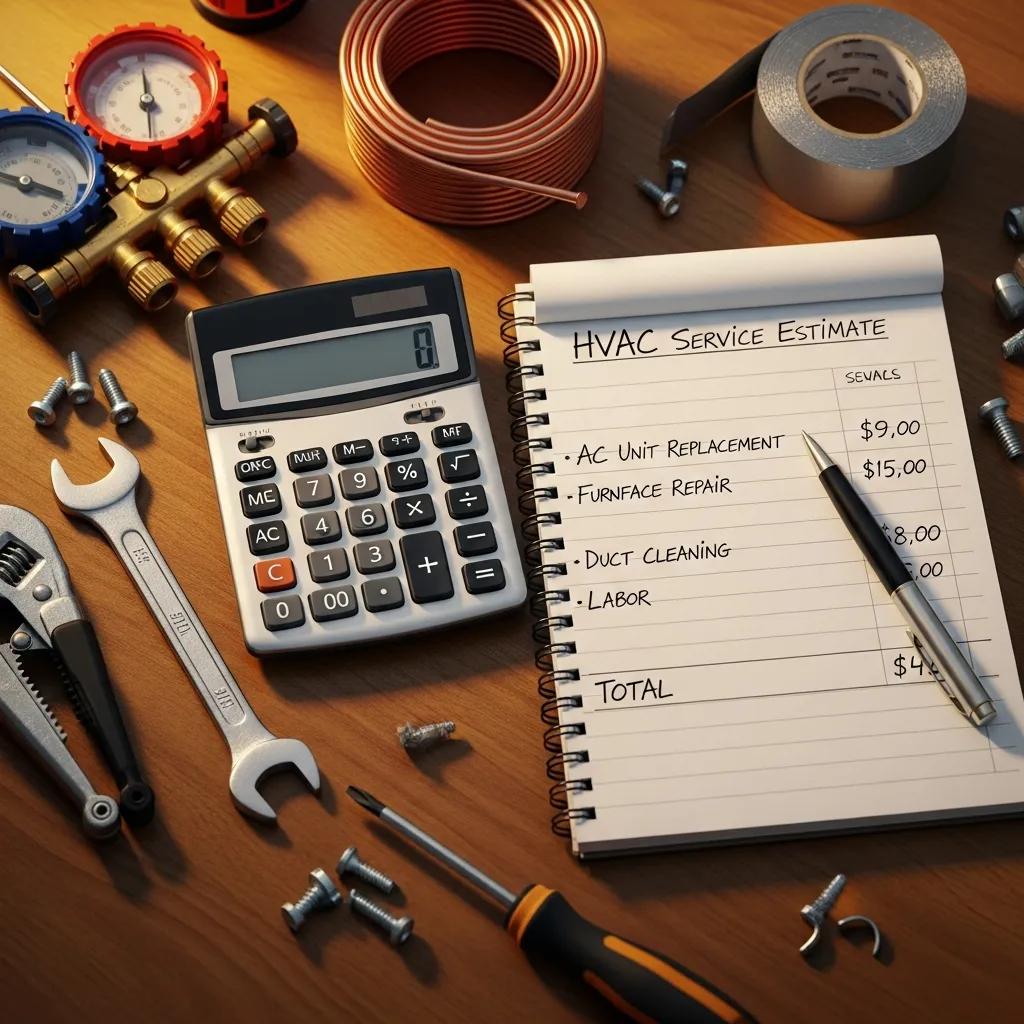
Expect a typical spring tune-up to cost roughly $100–$200, depending on region and scope. That modest cost often prevents larger bills later.
Factors Influencing HVAC Tune-Up Pricing
Price depends on:
- Provider reputation — established companies may charge more.
- Location — labor rates vary by region.
- Service complexity — repairs and extra diagnostics raise the price.
Compare quotes and reviews to find a technician who balances price and expertise.
Comparing DIY Maintenance vs. Professional Services
Both have a role:
- DIY — Cost-effective for filters, clearing debris, and basic checks.
- Professional — Necessary for refrigerant work, electrical repairs, and in-depth diagnostics.
Use DIY for routine upkeep and hire a professional for inspections, repairs, or any refrigerant or electrical tasks.
When Should You Hire Professional HVAC Services for Spring Maintenance?
Homeowners can do many basic tasks, but call a technician when signs point to deeper issues.
Signs Your AC Unit Needs Expert Attention
Arrange professional service if you notice:
- Unusual noises like grinding or squealing.
- Inconsistent cooling or rooms that won’t reach set temperatures.
- Rising energy bills without a clear cause.
If these appear, schedule an inspection to diagnose and correct the root cause.
How Professional Maintenance Extends Equipment Lifespan
Technicians catch small problems, lubricate moving parts, check electrical connections, and verify system balance. These steps reduce wear, improve efficiency, and help your HVAC last longer.
Prioritizing spring maintenance minimizes the risk of unexpected failures and keeps your home comfortable.
Frequently Asked Questions
What are the signs that my HVAC system needs maintenance?
Odd noises, uneven cooling, reduced airflow, or sudden increases in energy bills all suggest it’s time for a check-up.
Can I perform HVAC maintenance myself, or should I hire a professional?
Homeowners can handle filter changes, debris removal, and basic vent checks. For refrigerant, electrical, or complex diagnostics, hire a licensed technician.
How can I improve the energy efficiency of my HVAC system?
Change filters, clean coils, keep the outdoor unit clear, seal ducts, use a programmable thermostat, and schedule annual professional tune-ups. Improving insulation also helps.
What should I do if my AC unit is not cooling properly?
Check thermostat settings and the filter, clear debris around the outdoor unit, and then call a technician if problems persist.
How often should I replace my HVAC filters?
Replace most standard filters every 1–3 months; homes with pets or allergies may need more frequent changes.
What is the average lifespan of an HVAC system?
Most systems last about 15–25 years. Regular servicing helps a system reach the higher end of that range.
Are there any DIY maintenance tasks I can perform to save money?
Yes. Regularly change or clean filters, clear debris around the outdoor unit, keep vents unobstructed, and verify thermostat settings to help maintain performance.
Conclusion
Spring HVAC maintenance is a small investment that improves comfort, lowers energy bills, and reduces emergency repairs. Follow the checklist here, handle simple DIY tasks, and book a professional tune-up each spring to keep your system running smoothly all summer.