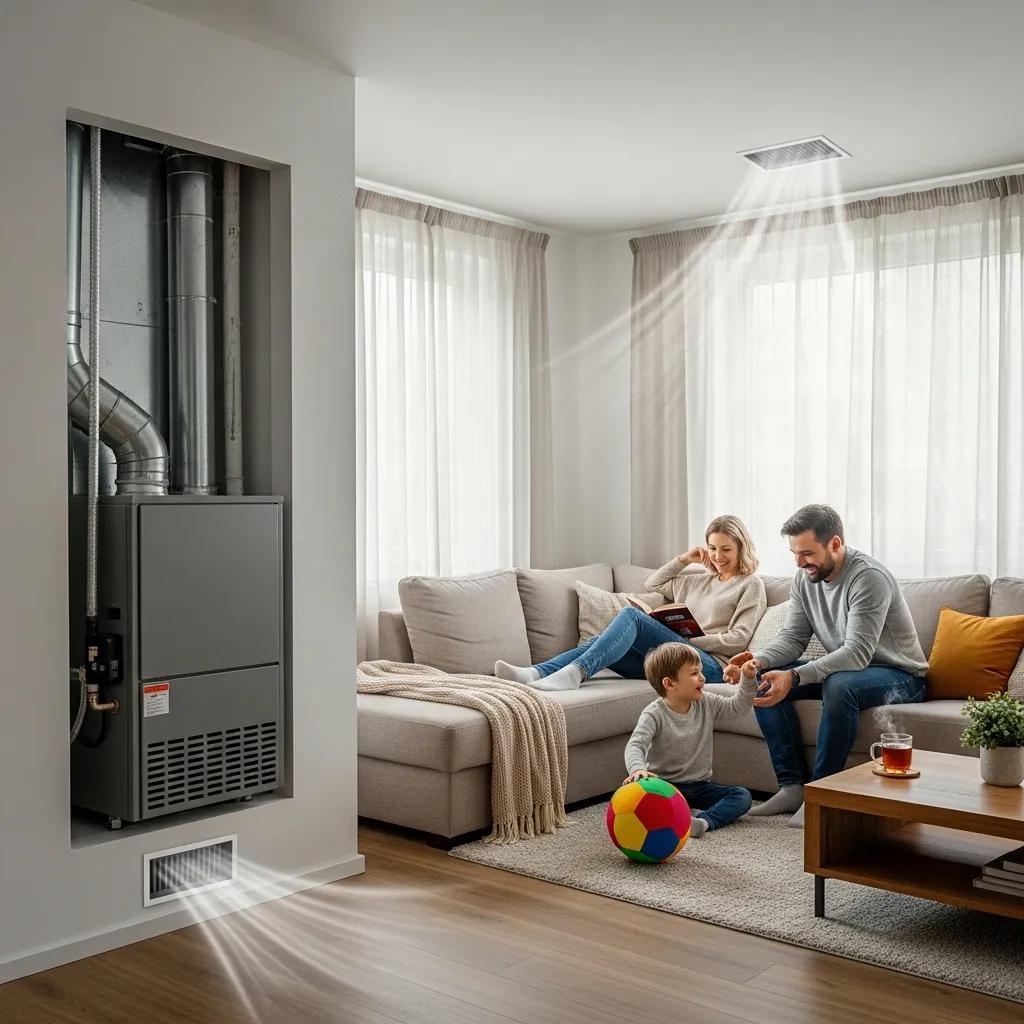
Troubleshooting Blocked Vents to Boost Furnace Airflow
Blocked vents and weak furnace airflow reduce comfort and raise heating costs, but many causes are simple to diagnose and fix without waiting for a technician. This article shows homeowners how to identify the most common airflow problems, prioritize quick 10–30 minute fixes, and decide when to escalate to professional HVAC service. You will learn the typical symptoms of restricted airflow, step-by-step DIY checks and cleaning tasks, and safety-related red flags that require immediate professional attention. The guide also includes concise cost guidance, practical preventative maintenance actions, and short diagnostic tables to help you act quickly. Read on for a prioritized checklist of quick wins, a how-to cleaning sequence, and a seasonal maintenance plan that keeps furnace air pressure and CFM moving efficiently all winter.
What Are the Common Causes of Blocked Vents and Weak Furnace Airflow?
Blocked vents and weak furnace airflow occur when components that move and route conditioned air—filters, vents, ductwork, or the blower—are restricted, damaged, or misconfigured, which reduces CFM and raises system pressure. The mechanism is straightforward: restrictions increase static pressure, the blower works harder, and less conditioned air reaches rooms, producing uneven heating and higher energy use. Identifying the root cause quickly directs you to low-effort DIY fixes or to call a pro for mechanical or duct repairs. Below is a concise comparison of the most common causes, their telltale symptoms, and how difficult each is to fix safely at home.
| Cause | Key Symptom(s) | DIY Fix Complexity |
|---|---|---|
| Dirty/fouled air filter | Reduced airflow at all vents; higher energy use | Easy — replace filter (10–20 min) |
| Furniture or debris blocking registers | One-room weak airflow; uneven heating | Easy — clear/relocate obstructions (5–15 min) |
| Duct leaks or collapsed flexible duct | Reduced airflow in zones; whistling/odd noises | Moderate — seal/repair ducts or call pro |
| Blower motor issues | Little/no airflow; unusual motor noise | Difficult — professional diagnosis often needed |
| External vent/exhaust blockage | Poor whole-house airflow; combustion concerns | Moderate — inspect and clear; pro if unsafe |
This comparison helps prioritize fast checks first (filter, registers) and reserve repairs for duct or blower problems that require tools or professional training. The next subsections explain the two highest-probability, homeowner-fixable causes in more detail.
How Do Dirty Air Filters and Dust Block Furnace Airflow?

A furnace air filter captures dust and particulates before air passes into the blower and ductwork, and when the filter becomes clogged it directly reduces CFM and raises static pressure across the system.
Mechanically, a dirty filter forces the blower to work harder while allowing less air into the supply plenum, which reduces delivery to registers and can trigger short-cycling or pressure-related safety trips. Check the filter by sliding it out—if it looks gray or full of debris, replace it immediately and note the MERV rating; higher MERV increases filtration but can restrict airflow if the blower is marginal.
Replacing the filter typically restores noticeable airflow within minutes and improves furnace energy efficiency when done monthly to quarterly depending on household conditions and filter type.
Understanding the impact of static pressure on blower performance is crucial for maintaining efficient airflow.
Furnace Blower Electricity Consumption and the Impact of Static Pressure
Furnace blowers constitute approximately 80% of a furnace’s total electricity consumption. Their primary function is to distribute heated air throughout a dwelling during heating cycles and cooled air during air conditioning operation. However, current furnace test procedures lack a method for calculating electricity consumption during cooling operation or standby periods, which represent a significant portion of the overall energy usage. Moreover, blower electricity consumption is highly sensitive to static pressure. Field data indicates substantial variation in static pressure within residential ductwork. Consequently, the static pressure employed in test procedures, along with the calculated fan power, does not accurately reflect actual field installations.
Furnace blower electricity: national and regional savings potential, 2008
Can Furniture or Debris Block Supply and Return Vents?
Physical obstructions like sofas over supply registers, rugs covering returns, or piles of laundry near vents restrict local airflow and create temperature imbalances across rooms, producing the appearance of a failing furnace when the core issue is simple blockage.
Test a vent by holding a tissue or lightweight ribbon near it—strong airflow keeps the material extended; weak or no movement indicates an obstruction or register problem.
Remedying these issues is straightforward: relocate furniture, remove rugs, vacuum pet hair from grills, and ensure returns are unobstructed; homeowners typically see even heating restored within a day after clearing blockages. After room-level fixes, reassess whole-house balance and proceed to duct or blower checks if problems persist.
How Can You Troubleshoot and Clear Blocked Heating Vents Yourself?
Start troubleshooting in sequence: filter, visible vents/registers, blower access panel (visual only, with power off), and basic duct inspection where accessible, because this order moves from easiest fixes to more invasive checks while minimizing risk.
The practical benefit is that most airflow restrictions are corrected at the filter or register level, returning appreciable CFM to living spaces with minimal time and no cost.
Common homeowner tasks, required tools, and time estimates:
| Task | Tool / Supply | Time to Complete |
|---|---|---|
| Replace air filter | New filter (correct size) | 5–15 minutes |
| Clean register & grille | Vacuum, brush, mild cleaner | 10–25 minutes |
| Clear external vent/screen | Gloves, ladder (if needed) | 10–30 minutes |
| Inspect accessible ducts | Flashlight, visual check | 15–30 minutes |
Begin with the filter replacement, then remove and clean registers, vacuum inside register openings with a hose attachment, and check exterior vents for nests or debris. After these steps, run the furnace and perform a tissue test at several vents—improved movement indicates success, while continued weak flow suggests a deeper duct, motor, or balancing issue that requires professional tools.
What Are the Steps to Clean Furnace Vents and Registers Effectively?
Cleaning registers starts with turning the furnace off at the thermostat and power panel to avoid blower noise and to keep dust from circulating during cleaning, and this safety-first step reduces risk while you remove grills.
Remove each register by unscrewing or pulling up, then vacuum the face and interior with a brush attachment, wipe with a mild cleaner if painted or grimy, and brush or vacuum the transition collar as far as your hose reaches to dislodge dust.
Reinstall registers and angle louvers to direct flow where needed, then restore power and run the system while checking airflow; many homeowners notice meaningful airflow improvement and quieter operation after this routine, and consistent cleaning prevents future build-up and uneven heating.
How Do You Replace a Furnace Air Filter to Improve Airflow?
To replace a furnace air filter, first identify the correct filter size and orientation by checking the existing filter for stamped dimensions and airflow arrows, then shut off the system and slide out the old filter to avoid stirring dust into the home. Select a filter with an appropriate MERV rating—MERV 6–8 balances particle capture and airflow for most homes, while MERV 11+ offers better filtration at the cost of higher resistance that can reduce airflow on older systems. Insert the new filter following arrow orientation toward the blower, secure access panels, and turn the system back on; expect immediate airflow improvement and set calendar reminders for replacement intervals based on household conditions (monthly for high dust/pet homes, up to 3 months in low-dust settings).
When Should You Call a Professional to Fix Furnace Airflow Issues?
Yes — call a professional if you encounter safety signals, mechanical failures, or diagnostic limits that exceed safe DIY work, because trained technicians use diagnostic tools and follow safety protocols that homeowners shouldn’t attempt.
Critical red flags include:
- No airflow at all after basic checks and filter replacement.
- Burning, electrical, or gas odors near the furnace or vents.
- Loud grinding, screeching, or metal-on-metal noises from blower or motor.
- Yellow or flickering pilot/flame issues or CO detector activation.
If you observe any of these, shut down the system safely and schedule professional service; attempting complex motor, control, or combustion repairs without proper training increases risk.
The decision table below helps weigh DIY possibility against typical pro cost ranges for common issues.
| Issue | DIY possible? | When to call pro | Typical cost range |
|---|---|---|---|
| Blower motor failure | No | Immediate pro for motor bench-test/replacement | $300–$900+ |
| Large duct leak or collapse | Partial | Seal or repair by pro for major damage | $200–$1,200+ |
| Electrical control faults | No | Pro diagnosis and safe electrical repair | $150–$600+ |
| Minor duct sealing | Yes | Call pro if recurring or inaccessible | $100–$600 |
This decision aid clarifies that while some duct sealing or minor repairs can be DIY, motor and electrical work should be left to certified technicians to ensure safe, long-lasting outcomes and restored airflow performance.
What Are Signs That Require HVAC Technician Inspection or Repair?
Signs that mandate professional inspection include persistent loss of airflow after filter and vent cleaning, irregular combustion behavior, and mechanical noises that point to a failing blower motor or bearing.
These symptoms often indicate internal component wear, electrical control failures, or obstructed combustion pathways that have safety implications beyond airflow, and professional diagnostics typically use tools like manometers and CFM meters to quantify pressure and flow.
Homeowners should avoid opening sealed motor assemblies or attempting electrical repairs because that can void warranties and create hazards; instead, document symptoms, note when they started, and ensure safe system shutdown if odors or smoke are present. Clear communication of observed symptoms speeds up professional diagnosis and resolution.
Understanding the extent of duct leakage in homes is essential for diagnosing airflow problems.
Analysis and Measurement of Residential HVAC Ductwork Leakage
An analysis of residential HVAC ductwork has been conducted. Ductwork in 55 homes in Northern Louisiana was evaluated to determine duct leakage using various measurement techniques. This study aimed to identify differences between existing methods and a revised method developed herein, referred to as the Generalized Subtraction Correction Algorithm (GSCA). A protocol for measuring and estimating return leaks at operating pressure was developed. The weighted average return leakage for the sampled homes was found to be 115 cfm at operating pressure, while the weighted average duct leakage was determined to be 348 cfm at 25 Pa. A methodology for determining supply leaks at operating pressure, based on the input from return leak measurements, was also derived.
Analysis and prediction of effectiveness for residential HVAC ductwork, 2007
How Do Professionals Diagnose and Repair Blower Motor or Ductwork Problems?
HVAC professionals diagnose blower and ductwork issues using instruments and tests—manometers to measure static pressure, anemometers or CFM meters to quantify airflow, and visual inspection with borescopes for inaccessible ducts—so they can distinguish between motor failure, duct leakage, or system design problems.
Typical professional repairs include blower motor repair or replacement, duct sealing with mastic or foil tape, reinforcement or replacement of collapsed flexible ducts, and pressure-balancing via dampers or register adjustments to restore proper CFM distribution.
After repairs, technicians often run performance tests to verify reduced static pressure and restored airflow, which improves comfort and system efficiency; documented before-and-after measurements help homeowners understand the value of the repair.
What Preventative Maintenance Practices Help Maintain Optimal Furnace Airflow?

Preventative maintenance preserves system airflow by addressing the common causes before they escalate: scheduled filter changes, routine register cleaning, annual professional tune-ups, and basic home weatherization reduce load and maintain consistent CFM.
Regular maintenance lowers the chance of blower strain and duct complications, extending equipment life and keeping heating bills lower through improved energy efficiency.
The checklist below outlines recurring actions and typical frequencies to help homeowners build a simple seasonal maintenance routine that prevents airflow problems before they start.
- Replace or inspect filters: Monthly to quarterly depending on filter type and household conditions.
- Cleanvents and returns: Every 1–3 months; vacuum grills and remove obstructions.
- Schedule annual tune-up: Pre-winter inspection for burner, blower, and controls.
- Inspect ductwork & insulation: Every 2–5 years or when moving rooms/renovating.
Implementing these steps reduces static pressure issues and often prevents emergency repairs; combining simple filter discipline with an annual professional tune-up yields the best balance of DIY effort and expert verification. Home weatherization—sealing window/door gaps and insulating accessible ducts—complements HVAC maintenance by lowering overall heating load, which directly supports sustained, balanced furnace airflow and comfort throughout the heating season.
Frequently Asked Questions
What are the signs that indicate a need for furnace maintenance?
Signs that your furnace may need maintenance include unusual noises such as grinding or screeching, inconsistent heating across rooms, and increased energy bills without a change in usage. Additionally, if you notice a burning smell or if your furnace frequently cycles on and off, these could indicate underlying issues. Regular maintenance can help prevent these problems by ensuring that all components are functioning properly and efficiently, ultimately extending the life of your furnace.
How often should I schedule professional HVAC inspections?
It is recommended to schedule professional HVAC inspections at least once a year, ideally before the heating season begins. This annual tune-up allows technicians to check and service critical components such as the blower, burners, and controls. Regular inspections help identify potential issues before they escalate, ensuring your system operates efficiently and safely. Some homeowners may benefit from more frequent inspections, especially if they have older systems or live in areas with extreme weather conditions.
Can I use a higher MERV-rated filter for better air quality?
While using a higher MERV-rated filter can improve air quality by capturing smaller particles, it may also restrict airflow if your furnace is not designed to handle it. Filters with a MERV rating above 11 can create higher static pressure, which can strain the blower motor and reduce overall efficiency. It’s essential to balance filtration needs with your system’s capabilities. Always consult your furnace’s manual or a professional to determine the best filter type for your specific system.
What should I do if my furnace is blowing cold air?
If your furnace is blowing cold air, first check the thermostat settings to ensure it is set to “heat” and that the temperature is higher than the current room temperature. Next, inspect the air filter; a clogged filter can restrict airflow and cause the furnace to malfunction. If these steps do not resolve the issue, there may be a more significant problem, such as a malfunctioning blower motor or a gas supply issue, which requires professional attention.
How can I improve airflow in specific rooms of my home?
To improve airflow in specific rooms, start by ensuring that all vents are unobstructed and clean. You can also adjust the dampers in your ductwork to redirect airflow to underperforming areas. Additionally, consider using fans to help circulate air and maintain a comfortable temperature. If airflow issues persist, it may be necessary to evaluate the ductwork for leaks or blockages, or consult a professional for a more comprehensive assessment and potential solutions.
What are the risks of ignoring furnace airflow issues?
Ignoring furnace airflow issues can lead to several risks, including increased energy costs due to inefficient operation, uneven heating throughout your home, and potential damage to the furnace itself. Prolonged airflow problems can cause the blower motor to overheat, leading to costly repairs or replacements. Additionally, inadequate airflow can result in poor indoor air quality, which may affect your health. Regular maintenance and prompt attention to airflow issues can help mitigate these risks and ensure a safe, comfortable living environment.
Is it safe to perform DIY repairs on my furnace?
While some minor maintenance tasks, such as changing air filters and cleaning vents, can be safely performed by homeowners, more complex repairs should be left to professionals. DIY repairs on electrical components, gas lines, or internal furnace mechanisms can pose safety risks, including fire hazards and carbon monoxide leaks. If you encounter any signs of mechanical failure or safety concerns, it is best to contact a qualified HVAC technician to ensure proper diagnosis and repair.
Conclusion
Addressing blocked vents and weak furnace airflow can significantly enhance your home’s comfort and energy efficiency. By following the outlined troubleshooting steps and preventative maintenance practices, homeowners can easily identify and resolve common issues, saving time and money. For those facing persistent problems, seeking professional assistance ensures safety and optimal performance. Start improving your furnace‘s airflow today by exploring our expert resources and tips.