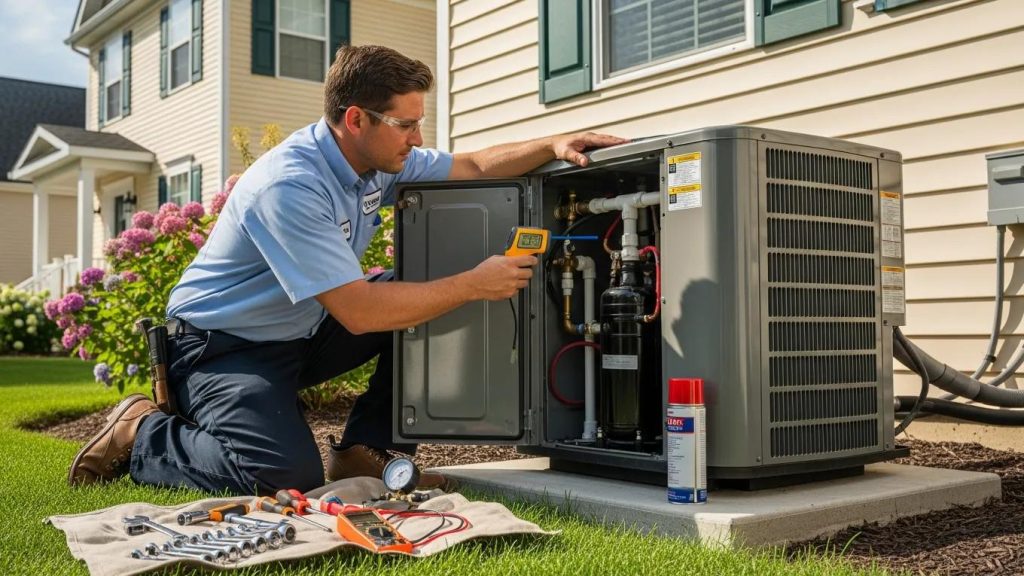
Air Conditioner Repair and Home AC Troubleshooting for Summer Heat Relief
By Furance Excahnge, Furnace Exchange
Summer increases our reliance on air conditioners, and extra use often exposes faults. This guide lists common AC problems, clear troubleshooting steps, and practical maintenance to help you stay comfortable and avoid surprises.
Key Takeaways
- Regular AC maintenance improves efficiency and reduces breakdown risk in hot months.
- Common issues: poor cooling, strange noises, and frequent cycling—often from dirty filters or refrigerant loss.
- Check thermostat settings, inspect filters, and monitor energy use before calling a technician.
- Schedule professional HVAC maintenance at least annually to catch small issues early.
- Call emergency service for total failure, strong odors, or visible refrigerant leaks.
- Extra heat relief: window treatments, ceiling fans, and better indoor airflow.
- Typical recharge in Northwest Indiana runs about $200–$300; fix leaks before recharging.
Common Issues During Hot Weather
High temperatures and constant run-time strain systems. The most frequent problems are reduced cooling, odd noises, and short cycling—each increases wear and lowers comfort.
- Poor Cooling Efficiency: Often caused by low refrigerant or clogged filters.
- Unusual Noises: Grinding, rattling, or squealing suggest mechanical trouble or loose parts.
- Frequent Cycling: Rapid on/off cycles can point to thermostat faults or refrigerant issues.
Spotting these signs early lets you act before small faults become major repairs.
Essential Maintenance Tips

Simple, regular care keeps an AC running well. Focus on three essentials: replace or clean filters, verify refrigerant when cooling falters, and get annual professional checks.
- Change the Air Filter: Clean or replace filters regularly to preserve airflow and indoor air quality.
- Check Refrigerant Levels: Low refrigerant reduces cooling; leaks must be repaired before recharging.
- Schedule Professional Maintenance: Annual service finds small problems before they become costly.
Following these steps lowers breakdown risk. If you live in Northwest Indiana, Furnace Exchange LLC offers HVAC maintenance, estimates, and scheduling help.
How Often Should You Schedule Professional AC Maintenance?
Have a technician inspect your system at least once a year; consider an extra check during peak summer to catch load-related issues.
Troubleshooting Steps
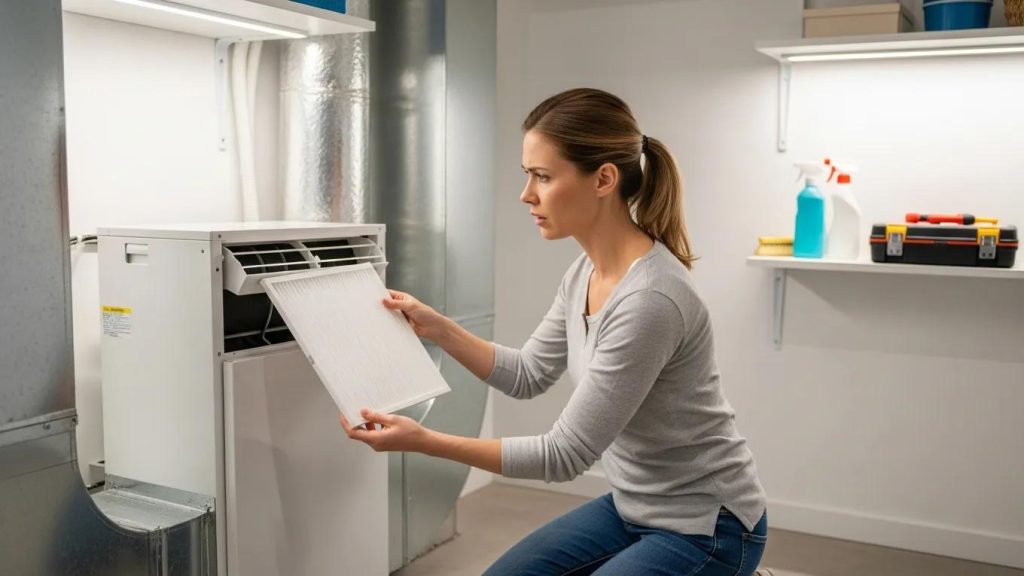
You can diagnose many problems safely: check controls, inspect filters, and watch energy use to narrow likely causes.
- Check Thermostat Settings: Confirm cooling mode and that the set temperature is lower than room temperature.
- Inspect Air Filters: Replace clogged filters—this often restores airflow and cooling.
- Monitor Energy Usage: Spikes or sustained high use can indicate system inefficiency or faults.
If you observe refrigerant leaks, electrical problems, or repeated failures, contact emergency HVAC services to avoid damage or safety hazards.
When to Contact Emergency HVAC Service in Northwest Indiana
Call emergency service for total system failure, strong or unusual odors, or any visible leaks—these can be hazardous or cause more damage if delayed.
- Complete System Failure: AC won’t turn on or respond—seek immediate help.
- Foul Odors: Burning or chemical smells require urgent inspection.
- Visible Leaks: Refrigerant or moisture around the unit needs prompt professional assessment.
Recognising these warnings helps you act quickly and protect your home during extreme heat.
Additional Strategies for Heat Relief
AC maintenance is primary, but passive measures reduce indoor heat and AC load: block direct sun, improve airflow, and use fans.
- Use Window Treatments: Shades or reflective films cut solar heat gain.
- Utilize Ceiling Fans: Fans boost circulation and enhance perceived cooling.
- Optimize Indoor Airflow: Keep vents clear so conditioned air reaches living spaces evenly.
These steps lower indoor temperature and let your AC run less often, saving energy and reducing wear.
Why is My AC Unit Not Cooling During Northwest Indiana Summers?
Common causes: dirty filters limiting airflow, low refrigerant from leaks, or worn mechanical parts. Each requires a different remedy—clean filters, fix leaks, or repair components.
- Dirty Air Filters: Replace clogged filters to restore airflow.
- Refrigerant Issues: Low refrigerant needs diagnosis and leak repair before recharge.
- Mechanical Failures: Worn parts reduce efficiency; professional repairs may be needed.
How to Troubleshoot Home AC Problems Quickly and Safely
When you notice problems, use safe steps: power down if overheating, check breakers, and clear debris from the outdoor unit to restore airflow.
- Turn Off the Unit: Stop the system if overheating or loud mechanical noises occur.
- Check the Breaker: A tripped breaker can explain sudden shutdowns.
- Inspect the Condenser: Remove leaves, grass, and obstructions around the outdoor unit.
Use these measures to manage minor issues safely until a technician inspects the system.
Steps to Check Your Air Conditioner Before Calling Repair Services
Run this quick checklist before booking a repair: confirm the thermostat, ensure vents are clear, and check the outdoor condenser for dirt or debris.
- Inspect the Thermostat: Verify it powers on and the settings are correct.
- Evaluate Air Flow: Make sure vents are unobstructed.
- Examine Outdoor Unit: Clean visible dirt and clear plants away from the condenser.
These checks often avoid unnecessary calls and help a technician diagnose the issue faster if service is needed.
What Are Essential AC Maintenance Tips for Summer Heat?
Prioritise regular filter changes, annual professional inspections, and monitoring refrigerant and system performance to reduce mid-season failures and extend service life.
- Regular Filter Changes: Keep filters clean to improve efficiency.
- Professional Inspections: Annual checks find early signs of trouble.
- Monitor Refrigerant Levels: Address drops promptly to avoid performance loss.
How Does AC Recharge Work and What Does It Cost in Northwest Indiana?
Recharging restores refrigerant so the system cools correctly. In Northwest Indiana, a typical recharge is commonly around $200 to $300, depending on work required. Identified leaks must be repaired to prevent repeat service and inefficiency.
This guide summarises practical troubleshooting and maintenance to help you keep your AC working through summer—use these steps to maintain comfort and limit avoidable repairs.
Frequently Asked Questions
What are the signs that my AC needs a recharge?
Warm air, continuous running without reaching set temperature, ice on evaporator coils, hissing noises, or visible leaks all suggest low refrigerant.
How can I increase the lifespan of my air conditioning unit?
Yearly professional service, periodic coil cleaning, regular filter changes, and keeping the outdoor unit clear of debris help extend life.
What should I do if my AC is making strange noises?
Turn it off for safety, look for loose panels or debris, and call a qualified technician if the source is unclear.
Can I troubleshoot AC issues without professional help?
Yes—start with the thermostat, filters, and power checks. For refrigerant, electrical, or unsafe conditions, call a professional.
What alternative cooling strategies can I use in addition to my AC?
Use shades or reflective films, run ceiling fans, and keep vents unobstructed to lower indoor temperatures.
How do energy-efficient AC units differ from standard models?
Energy-efficient units use better components and controls (e.g., variable-speed compressors) to cool with less power; look for ENERGY STAR models.
Is it worth it to invest in a smart thermostat for my AC system?
A smart thermostat enables scheduling, remote control, and usage tracking, which can improve comfort and reduce energy bills over time.
Conclusion
Regular maintenance and prompt troubleshooting keep your home comfortable and lower repair costs. Use the checks and practices here, and contact a professional when issues exceed basic fixes to ensure reliable cooling all summer.