Efficient Heating Solutions: Maximizing Heat Pump Efficiency and Sustainable Technologies in 2026
Efficient heating combines technologies and building improvements that deliver the same or better indoor comfort using less energy, lower operating cost, and reduced carbon emissions. This guide explains how modern heat pumps, geothermal systems, high-efficiency furnaces and boilers, smart controls, sustainable renewables, and improved insulation work together to cut energy use and bills in 2025. Readers will learn the core mechanisms (heat transfer vs. heat generation), the key metrics used to compare systems (COP, HSPF, AFUE, SEER2), and practical steps for choosing systems based on climate, budget, and retrofit complexity. The article maps top system choices, explains how smart thermostats and AI optimize performance, reviews insulation and air sealing priorities, and summarizes how incentives can offset upfront costs. Throughout, the focus is on actionable comparisons, measurable efficiency gains, and the technologies—variable-speed compressors, low-GWP refrigerants like R-454B and R-32, and zoning/ERV integration—that matter for homeowners and installers today.
What Are the Most Energy-Efficient Heating Systems in 2025?

Energy-efficient heating systems prioritize moving heat rather than creating it, which is why heat pumps and geothermal systems top efficiency rankings in 2025 by delivering high COP values and low operating cost. These systems achieve efficiency through heat-transfer cycles and advanced components—such as variable-speed compressors and modern refrigerants (R-454B, R-32)—resulting in lower energy input per unit of heat delivered. Selecting the optimal system depends on climate, existing ductwork, and project budget; cold-climate air-source heat pumps and ground-source geothermal each have distinct performance envelopes and payback timelines. Below is a concise comparison to help readers choose between leading system types, followed by a short interpretation of the table results and practical next steps.
Different system types deliver efficiency in different climates and project contexts.
| System Type | Typical Efficiency Metric | Relative Savings & Best Climate |
|---|---|---|
| Air-source heat pump (cold-climate models) | COP 2.5–4.5; HSPF improved in 2023 specs | Strong savings in moderate to cold climates with recent cold-climate tech |
| Ground-source (geothermal) heat pump | COP 3.5–5.0 | Highest year-round efficiency; best for new builds or large retrofits |
| Ductless mini-split (air-to-air) | COP 3.0–5.0 | High zonal efficiency for homes without ductwork; best in mild to cold climates when sized properly |
| High-efficiency furnace (condensing) | AFUE 90–98% | Good where fuel cost is low or as hybrid backup in very cold climates |
| Radiant floor heating (electric or hydronic) | Varies; hydronic with heat pump source efficient | Excellent comfort and distribution efficiency; best when paired with heat pump or condensing boiler |
This table clarifies that heat pumps dominate efficiency metrics, while furnaces and radiant systems can still be efficient depending on fuel prices and system integration. The next subsection explains how heat pumps achieve those efficiency advantages and which components drive performance improvements.
How Do Heat Pumps Achieve Superior Energy Efficiency?
Heat pumps transfer heat from one place to another using a refrigeration cycle, which is fundamentally more efficient than burning fuel to create heat. This transfer mechanism allows a heat pump to deliver several units of heat for each unit of electrical energy consumed—a ratio expressed as COP (Coefficient of Performance)—so a COP of 3 means 3 kWh of heat per 1 kWh of electricity. Advances like inverter-driven variable-speed compressors increase seasonal performance by matching output to demand and reducing cycling losses, while low-GWP refrigerants (R-454B, R-32) reduce environmental impact and can improve thermodynamic performance. Cold-climate heat pump designs combine enhanced frost management, optimized heat exchangers, and larger capacity modulation to retain efficiency at lower outdoor temperatures. Understanding these mechanisms informs selection: for homes in colder regions, choose models explicitly rated for cold-climate performance and confirm COP/HSPF figures for the expected operating range.
These efficiency principles naturally lead into comparing heat pumps with ground-source options, where soil temperatures further stabilize performance.
What Benefits Do Geothermal Heating Systems Offer Compared to Traditional Methods?
Ground-source (geothermal) heat pumps use the earth as a stable heat source or sink and typically achieve higher seasonal COPs than air-source systems because ground temperatures vary much less than air. That stable baseline lets geothermal systems reach COPs in the 3.5–5.0 range and provides predictable year-round performance, which translates to substantial long-term energy savings and lower carbon emissions compared to conventional furnaces. The tradeoffs are higher upfront installation costs and site-specific drilling or loop-field requirements, making geothermal most cost-effective for new construction or major retrofits with sufficient land or borehole access. Over a 15–25 year lifecycle, many properties realize favorable ROI through reduced energy bills and system longevity, but accurate site and soil analysis is essential before committing. After evaluating geothermal viability, consider hybrid strategies that pair geothermal or heat pumps with backup systems for peak demand or extreme cold.
This consideration of lifecycle ROI leads naturally to exploring high-efficiency combustion-based alternatives and how their ratings compare.
How Do High-Efficiency Furnaces and Boilers Improve Home Heating?
High-efficiency furnaces and boilers increase the portion of fuel energy converted to useful heat by improving heat exchanger design and recovering latent heat from combustion products. AFUE (Annual Fuel Utilization Efficiency) quantifies the percentage of fuel energy converted to space heat over a typical year, and higher AFUE ratings mean lower fuel consumption for the same heat output. Condensing boilers and furnaces extract additional heat by condensing water vapor in flue gases, which raises efficiency substantially versus non-condensing models and reduces stack losses. Modern systems also incorporate variable-speed blowers and modulating burners to reduce cycling losses and improve comfort. Comparing AFUE ranges and installation factors helps homeowners weigh fuel costs, venting constraints, and replacement thresholds when considering a high-efficiency upgrade.
Below is a table comparing common furnace and boiler types with practical installation considerations to guide decisions.
| Appliance Type | AFUE Range | Installation Considerations & Lifecycle Notes |
|---|---|---|
| Condensing gas furnace | 92–98% | Requires PVC or corrosion-resistant venting; good for replacements where gas is primary fuel |
| Condensing boiler (hydronic) | 90–98% | Needs proper condensate handling and compatible radiators or floor systems; ideal for hydronic retrofits |
| Non-condensing furnace | 78–85% | Lower upfront cost but higher fuel use; less suitable for long-term savings goals |
| Biomass boiler | 70–90% | Requires fuel storage and regular maintenance; can be cost-effective where biomass fuel is locally cheap |
This table shows that condensing technology raises effective AFUE substantially but requires attention to venting and condensate management. Next, the article defines AFUE in practical terms and how it translates to household energy bills.
What Are AFUE Ratings and Why Do They Matter for Furnaces?
AFUE measures how efficiently a furnace converts fuel to heat on an annual basis, with a simple meaning: AFUE 90% means 90% of the fuel’s energy becomes heat for the home while 10% is lost. A practical calculation example: replacing a 80% AFUE furnace with a 95% AFUE unit reduces fuel consumption roughly by (95−80)/95 ≈ 15.8% for the same heat output, producing meaningful savings over a heating season. Higher AFUE also typically reduces greenhouse gas emissions per unit of heat delivered because less fuel is burned, though absolute emissions depend on the fuel type. For replacements, aim for condensing systems with AFUE in the 92–98% range where venting and condensate handling are feasible; otherwise, prioritize incremental efficiency improvements and proper sizing to avoid efficiency losses from oversizing. Knowing AFUE simplifies cost-benefit calculations when comparing equipment quotes and expected payback periods.
Transitioning from AFUE to specific condensing mechanics clarifies what enables those higher numbers.
How Do Condensing Furnaces Enhance Heating Performance?
Condensing furnaces recover latent heat from flue gases by cooling exhaust below the dew point so water vapor condenses and releases additional heat, which the heat exchanger captures for the home. This secondary heat recovery is why condensing appliances reach AFUEs in the low- to high-90s and significantly outperform traditional non-condensing units. Installation requires corrosion-resistant venting materials and condensate drainage; ignoring these requirements can undermine performance or cause damage. Proper maintenance includes periodic condensate trap checks and ensuring the secondary heat exchanger is clean to preserve efficiency and longevity. Understanding these operational details helps homeowners and installers avoid common pitfalls and optimize performance over the system’s lifecycle.
Having covered combustion options, the next section explores how smart controls further optimize energy use for any heating system.
How Can Smart Home Heating Solutions Optimize Energy Use?
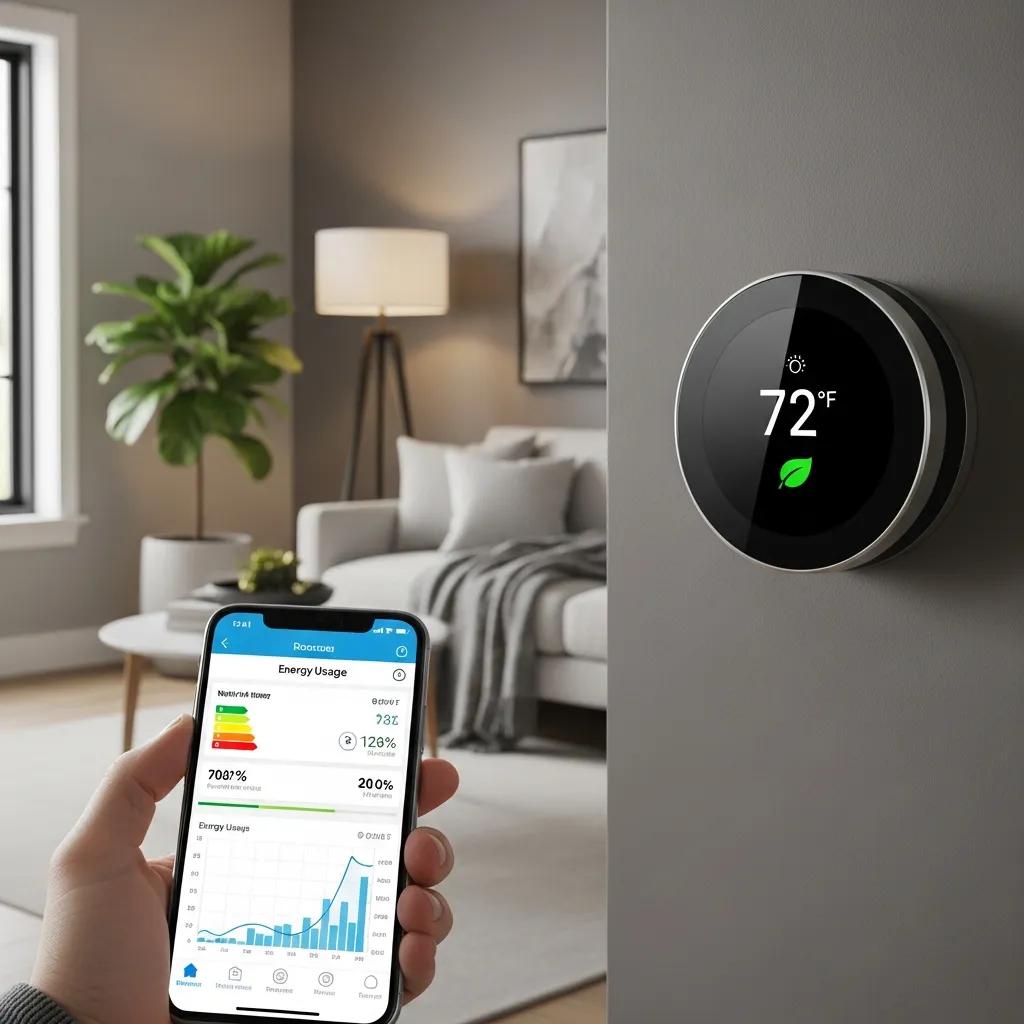
Smart home heating solutions combine adaptive controls, remote access, zoning, and data analytics to reduce waste and maintain comfort more efficiently than manual thermostat schedules. Smart thermostats with learning algorithms, geofencing, and occupancy sensing adapt setpoints to actual use patterns and weather forecasts, often reducing heating energy by a measurable percentage when paired with proper system tuning. Zoning systems and smart dampers divide a home into independently controlled areas so heating is concentrated where and when needed, increasing comfort while lowering overall energy use. Integration with IoT HVAC monitoring and Energy Recovery Ventilators (ERVs) adds ventilation efficiency and continuous performance diagnostics. The following list explains core smart thermostat features and their direct contribution to efficient heating control.
Key smart features drive measurable savings and improve comfort without major equipment changes.
- Learning algorithms adapt schedules and temperatures based on historical occupancy and behavior.
- Geofencing automatically adjusts setpoints when occupants leave or return to a home, reducing wasted runtime.
- Remote monitoring and app control enable quick adjustments and energy-use visibility from anywhere.
- Zoning and multi-stage system compatibility allow rooms to be heated only when needed, lowering consumption.
These capabilities illustrate why adding smart controls is often a high-value retrofit before or alongside equipment replacement. The following subsection explains AI-driven enhancements to these smart systems.
What Features Do Smart Thermostats Offer for Efficient Heating?
Smart thermostats offer a suite of features—learning algorithms, remote scheduling, occupancy sensing, and integration with weather forecasts—that directly lower heating demand by avoiding unnecessary runtime and optimizing setpoints. Learning algorithms build a profile of household behavior and automatically refine schedules, reducing manual programming while maintaining comfort. Remote access and mobile apps let users adjust setpoints in real time and monitor energy reports, increasing awareness and enabling quick corrections to inefficient schedules. Support for zoning and multi-stage systems ensures compatibility with variable-speed compressors and heat pumps, maximizing seasonal performance. These capabilities combine to produce reported energy savings and improved comfort when correctly configured for the specific HVAC components and building envelope.
This feature set sets the stage for AI implementations that take optimization a step further through predictive control and fault detection.
How Does AI Integration Improve Heating System Performance?
AI integration layers predictive control and anomaly detection on top of smart thermostats to optimize efficiency proactively rather than reactively. Predictive scheduling uses weather forecasts and occupancy prediction to preheat or delay heating in a way that minimizes peak energy use while preserving comfort, and forecast-based preheating is particularly valuable in regions with volatile weather swings. IoT diagnostics detect performance drift or faults—such as compressor inefficiencies or airflow restrictions—allowing maintenance before efficiency declines significantly. AI can also recommend setpoint and zoning adjustments to align with time-of-use pricing or renewable generation patterns, thereby minimizing cost as well as energy consumption. Implementing AI best practices requires strong data privacy controls, clear opt-in policies, and transparent performance metrics to maintain homeowner trust.
With controls and system choices covered, the article now explores sustainable heating technologies that expand low-carbon options for homes.
What Sustainable Heating Technologies Are Transforming Homes?
Sustainable heating technologies leverage renewables and low-carbon fuels—solar thermal, biomass, hybrid heat pump systems, infrared panels, and electric boilers—to reduce fossil fuel dependence and emissions. These options vary in space requirements, seasonal effectiveness, and integration complexity, but collectively they enable substantial carbon reductions when paired with efficient distribution and controls. Solar thermal contributes direct heat for domestic hot water and supplemental space heating in the sunny months, while biomass boilers can replace fossil fuels where sustainable feedstock is available. Hybrid systems combine heat pumps with combustion backups to optimize cost and performance across seasons, and electric infrared panels offer targeted, low-inertia heating in specific rooms. The list below outlines notable sustainable approaches and where they fit in home energy strategies.
Understanding these technologies clarifies tradeoffs between emissions, cost, and practicality for different homes.
- Solar thermal systems supplement hot water and space heating during sunny periods, reducing energy drawn from the grid.
- Biomass systems provide renewable combustion heat but require fuel storage and supply management.
- Hybrid systems pair heat pumps with furnaces or boilers to switch modes for optimal seasonal performance.
How Do Solar and Biomass Heating Systems Contribute to Sustainability?
Solar thermal collectors convert sunlight into heat for domestic hot water or space heating and can cut fossil fuel use substantially during sunny months, lowering both energy bills and carbon emissions. Performance varies seasonally and is most effective when combined with efficient storage and distribution—such as insulated tanks and hydronic floor loops—or when used to preheat domestic water for heat pump systems. Biomass heating uses renewable organic fuels and can provide low-carbon heat where sustainably sourced feedstock and local logistics make it feasible; lifecycle emissions depend heavily on supply chain practices. Both technologies demand careful operational planning: solar thermal needs proper sizing and freeze protection in cold climates, while biomass requires consistent fuel quality, storage, and maintenance. Considering these constraints and integrating these systems with smart controls improves overall sustainability outcomes and user experience.
Integrating solar or biomass often makes hybrid system designs more practical, which the next subsection explores.
What Role Do Hybrid Heating Systems Play in Energy Savings?
Hybrid heating systems combine two or more heat sources—commonly a heat pump with a gas or biomass backup—to maximize seasonal efficiency and manage costs when electricity or ambient temperatures vary. Control strategies often switch based on outdoor temperature thresholds, energy price signals, or real-time COP estimates so the system uses the most efficient source at any moment. Hybrids can be configured for price-driven switching (favoring the cheaper energy source) or temperature-driven switching (using backup when heat pump COP drops below a threshold), enabling robust performance in very cold climates. The typical energy savings depend on the relative efficiencies and cost of fuels; hybrids frequently outperform single-system approaches in regions with extreme winters or variable energy pricing. Evaluating hybrid ROI requires modeling seasonal loads, local energy prices, and anticipated maintenance costs to determine the best control logic.
Having explored generation and controls, the next major area is the building envelope — where insulation and air sealing multiply system efficiency gains.
How Does Proper Insulation and Air Sealing Enhance Heating Efficiency?
Proper insulation and air sealing reduce heat loss through the building envelope, lowering the amount of energy heating systems must supply and improving comfort and temperature stability. Increasing attic and wall R-values, insulating rim joists, and sealing common leakage paths cut heat flow and often reduce heating loads by a significant percentage, which in turn allows right-sizing equipment for better efficiency. Air sealing reduces infiltration losses and stack effect, preserving conditioned air and preventing cold drafts; combined with balanced ventilation (ERV/HRV) this maintains indoor air quality without energy penalty. The following list outlines top insulation materials and typical applications to guide retrofit decisions and material selection.
Effective envelope upgrades reduce both energy use and the required capacity of HVAC systems.
- Spray polyurethane foam provides high R-value and air sealing at junctions and rim joists.
- Cellulose insulation is an eco-friendly retrofit option for attics and wall cavities with good thermal performance.
- Rigid foam boards deliver continuous insulation for walls and foundation applications to reduce thermal bridging.
- Fiberglass batts remain cost-effective for new construction when installed without gaps and with proper air sealing.
These material choices shape the next subsection that compares R-values and recommended uses for common insulation types.
What Are the Best Insulation Materials for Reducing Heat Loss?
Selecting the best insulation material depends on location in the building, climate zone, and budget; common options include spray foam, cellulose, rigid foam, and fiberglass batts, each with distinct R-values and installation tradeoffs. Spray foam offers both high R-value per inch and effective air sealing, making it ideal for rim joists and irregular cavities, while closed-cell foam provides moisture resistance for below-grade applications. Cellulose is cost-effective for attic retrofits and has favorable environmental characteristics, though it requires careful installation to avoid settling. Rigid foam boards are excellent for continuous exterior insulation to reduce thermal bridging in walls or to insulate foundation walls. Tradeoffs include material cost, labor intensity, and whether the project is DIY-friendly versus needing professional installers; prioritizing attic and rim-joist work often yields the fastest payback.
Having outlined materials, the next subsection quantifies typical savings from air sealing and testing methods.
How Much Can Air Sealing Reduce Energy Bills?
Air sealing targets common leakage points—attic penetrations, recessed lights, windows, and door frames—to reduce uncontrolled ventilation and lower heating bills; typical whole-house air sealing projects can reduce heating energy use by up to roughly 10–30% depending on starting leakage and climate. Blower-door testing identifies the most significant leaks and prioritizes measures for the best payback, while infrared thermography helps find hidden thermal bypasses. Simple fixes like weatherstripping, caulking, and sealing duct boots often offer rapid payback, whereas extensive envelope upgrades deliver larger long-term savings. Combining air sealing with added insulation amplifies efficiency gains and can allow downsizing HVAC equipment, leading to both operational savings and lower upfront capital for right-sized systems.
With efficiency paths and envelope strategies covered, homeowners should know incentive options that can make upgrades more affordable in 2025.
What Government Incentives Support Efficient Heating Upgrades in 2025?
Government incentives in 2025 commonly include federal tax credits, state or provincial rebates, and utility point-of-sale incentives that lower the effective upfront cost of heat pumps, geothermal systems, and envelope upgrades. Eligibility typically depends on equipment specifications (certified efficiency ratings), installer certification, and sometimes income or building type; incentive programs aim to accelerate adoption by covering a portion of purchase and installation costs. Many utility programs also offer rebates for smart thermostats, weatherization, and diagnostic testing such as blower-door or duct-leakage tests. The table below maps common incentive types to eligible systems and typical value ranges in generalized terms to help homeowners identify likely opportunities without referencing specific program names or URLs.
This mapping helps readers understand which incentive types are commonly available and what they might expect during planning.
| Incentive Type | Eligible Systems | Typical Rebate/Credit Characteristic |
|---|---|---|
| Federal tax credit | Heat pumps, geothermal, insulation (specified criteria) | Percentage or capped credit against tax liability; requires qualifying equipment and documentation |
| State/Provincial rebate | Heat pumps, heat pump water heaters, weatherization | Point-of-sale rebates or post-install applications with varying caps by jurisdiction |
| Utility rebate | Heat pumps, smart thermostats, duct sealing | Often instant or mail-in rebates; may require approved installer or pre-approval |
| Low-interest financing / PACE | Whole-home upgrades | Enables spreading cost over time through property-tied financing or utility programs |
This table demonstrates common incentive channels and how they typically apply; homeowners should gather product specifications and installer documents to prepare applications. The next subsection summarizes the major incentive categories for heat pump projects.
Which Rebates and Tax Credits Are Available for Heat Pump Installations?
Heat pump incentives generally appear in three categories: federal tax credits that reduce tax liability for qualifying installations, state or provincial rebates targeting electrification goals, and utility rebates that incentivize specific measures like duct sealing or smart thermostat installation. Eligibility usually requires equipment to meet specific efficiency thresholds (e.g., certified HSPF/COP values) and may require documentation such as invoices, model numbers, and installer certification. Typical incentive values vary widely by program structure—some provide a fixed rebate per installed unit, others a percentage of cost up to a cap—but all aim to lower payback timelines for homeowners. To apply, homeowners should document system specifications and consult program administrators or utility representatives for application steps and required paperwork.
Having summarized rebates types, the following subsection explains regional variation and documentation requirements.
How Do Incentives Vary by Region and Heating Technology?
Incentives vary significantly by region due to differing policy priorities, utility structures, and climate considerations; some jurisdictions prioritize geothermal with higher rebates due to deep decarbonization goals, while others emphasize air-source heat pump adoption. Income qualifications, building type (owner-occupied vs. rental), and installer certification (e.g., approved contractor lists) frequently affect eligibility and rebate levels. Documentation typically includes proof of purchase, equipment model numbers, and sometimes pre- and post-installation inspections or performance data. Homeowners should compile specifications, receipts, and installer credentials ahead of time and consult their local energy office or utility to confirm current program details and any required timelines for applications.
This final incentive note naturally suggests the next steps: combine system selection, controls, and envelope upgrades with available incentives to maximize both performance and financial return.